Challenge
Many women lack confidence in car-buying due to limited knowledge, leading to hesitation and reliance on others: a knowledge gap rooted in cultural norms (cars framed as a "man's hobby") and a lack of hands-on exposure growing up.
Approach
A community-oriented, self-paced online course covering fundamental vehicle mechanics, car evaluation, and purchasing strategies, built around interactive multimedia, guided discovery, and scaffolded, collaborative learning. Understanding car mechanics and purchasing processes fosters independence, reduces vulnerability to misinformation, and empowers confident decision-making.
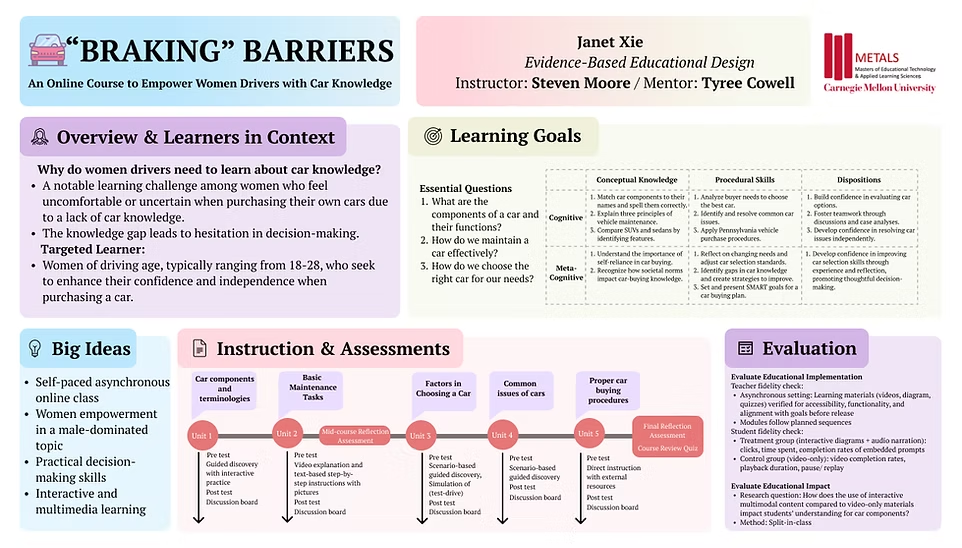
Big ideas
Self-paced, asynchronous online class
Women's empowerment in a male-dominated topic
Practical, decision-making skills
Interactive and multimedia learning
Essential questions
What are the components of a car, and their functions?
How do we maintain a car effectively?
How do we choose the right car for our needs?
Learning outcomes
Identify different car types and their functionalities
Evaluate car features and mechanics
Navigate the car-buying process independently
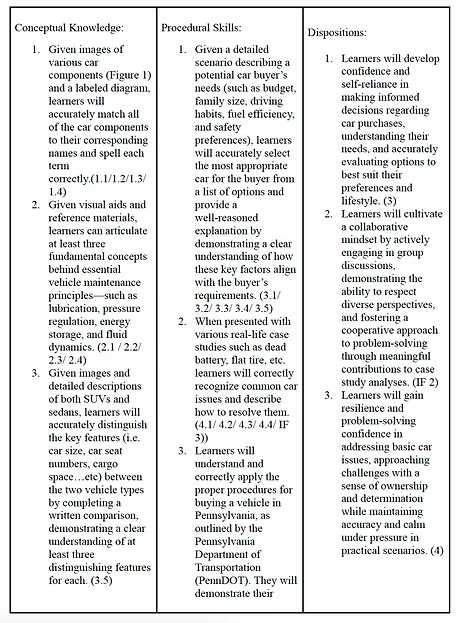
Instructional design framework
The course runs as a self-paced online course hosted on Her Campus, accessible on mobile and desktop, built for young women in Pennsylvania with little car-buying experience, using a community-oriented approach to create a supportive, inclusive learning environment.
The pedagogical approach combines:
Interactive multimedia
Videos, infographics, and clickable diagrams
Guided discovery
Hands-on activities like Car Evaluation and Selection
Collaborative learning
Discussion boards and peer feedback
Scaffolded learning
Foundational knowledge building toward practical application
Course structure
Unit 1
Car Types, Features, and Suitability
Unit 2
Car Components and Maintenance Basics
Unit 3
Evaluating Cars Based on Budget, Safety, Reliability
Unit 4
Common Car Issues & How to Handle Them
Unit 5
The Car Buying Process (specific to Pennsylvania)
Assessment design
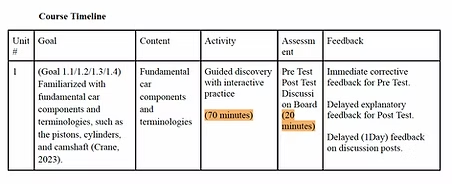
Each unit pairs a pre-test and post-test with a discussion board reflection, so learners get immediate corrective feedback early and delayed, explanatory feedback as they go deeper. Assessments take three forms:
Quizzes
Knowledge checks at different stages
Discussion boards
Learners reflect on scenarios and engage with peers
Self-assessment
Reflective practice on confidence and application
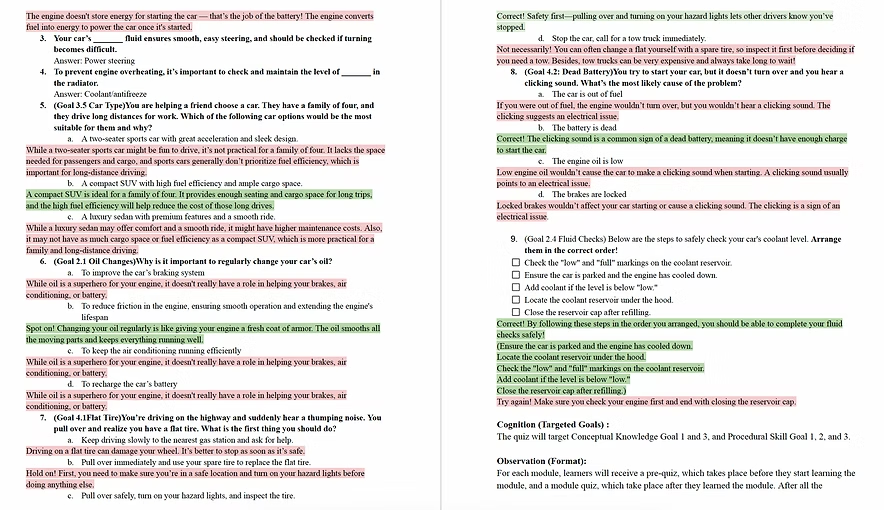
Example quiz questions:
Matching question
Identify car components in a labeled diagram
Scenario-based question
"Your car won't start, and you hear a clicking sound. What's likely the issue?" (a) Out of fuel (b) Dead battery (correct answer: b)
Decision-making question
Help a friend select a car based on budget, safety, and lifestyle
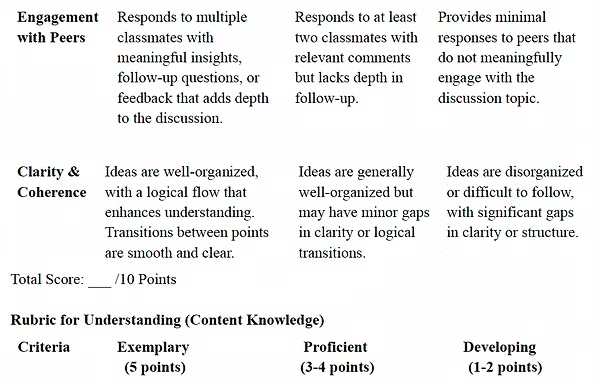
Rubrics for evaluation
Discussion board participation
Scored based on engagement, clarity, and relevance
Self-assessment criteria
Learners reflect on knowledge gained and future application
Interactive activities
Car Evaluation & Selection
- Learn about car safety, reliability, and test-drive considerations through interactive videos
- Compare different car options using an interactive comparison tool
- Select the most suitable car and justify the decision in a written or audio format
Clickable Car Component Diagram
Click on parts of a car image to reveal descriptions and functions
Course implementation & evaluation
Delivery format
Asynchronous, self-paced learning, advertised through DMVs, driving schools, and colleges
Evaluation metrics
Pre/post assessments to measure improvement, engagement metrics (discussion board participation, quiz attempts), and learner feedback surveys for content effectiveness
What's next
Planned expansions include additional modules on financing and negotiating car deals, and extending the course beyond Pennsylvania to other states.